Designing a Dream Wedding Suite with Watercolor Florals
Imagine holding a wedding invitation that feels less like a piece of paper and more like a piece of art. The soft, painterly blush of dusty rose petals, the gentle, organic sweep of greenery leaves—this is the essence of a watercolor aesthetic. It’s romantic, timeless, and carries an immediate sense of elegance and personal touch. For designers, planners, and creative couples, achieving this look consistently across every piece of stationery, from the main invite to the thank you card, is a beautiful challenge. A well-crafted template suite doesn’t just save time; it provides a cohesive visual foundation that sets the entire tone for a couple’s special day.
The Anatomy of a Cohesive Wedding Suite
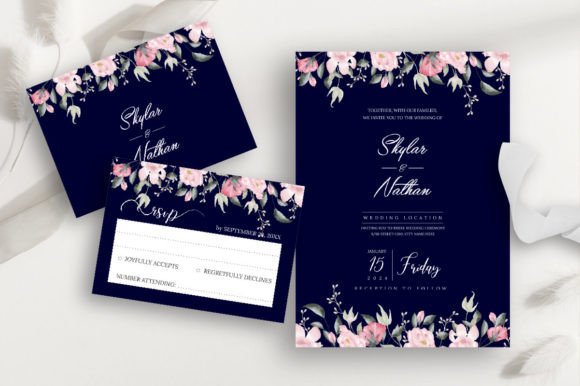
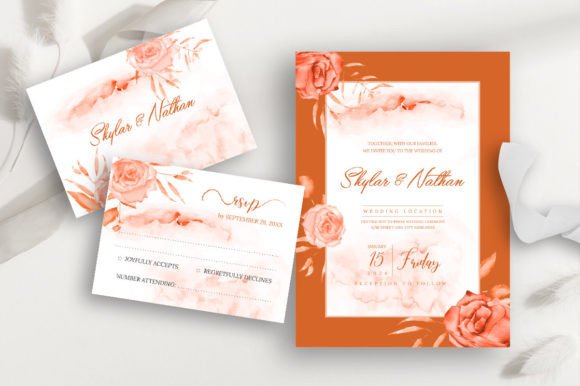
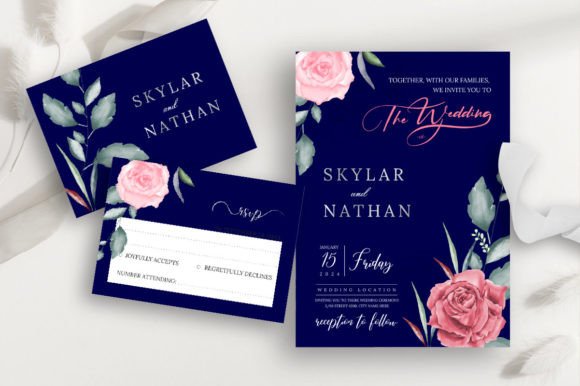
A successful wedding invitation suite is more than a single card. It’s a collection of coordinated pieces that guide guests through the event details while building anticipation. The primary invitation is the star, but it’s supported by essential companions like the RSVP card, details card, and envelope liners. When these elements share a unified design language—like the consistent watercolor rose motif and color palette—they create a professional and polished presentation. This visual consistency is crucial for brand identity in the context of a wedding; it communicates intentionality and care, making every interaction with the suite feel special and considered.
The provided Elegant Watercolor Rose Wedding Template suite is built with this principle in mind. It includes both the main 5″x7″ wedding card and the 3.5″x5″ RSVP card, each with proper bleed for professional printing. This attention to technical specifications ensures that the delicate watercolor edges print flawlessly, with no unattractive white borders. The inclusion of multiple file formats—EPS, SVG, JPG, and PNG—offers tremendous flexibility. The vector files (EPS, SVG) are the designer’s best friend, allowing for infinite scaling without loss of quality, which is perfect for adjusting layouts or creating large-format signage. The raster files (JPG, PNG) are ready-to-use for digital communications, like a wedding website or social media announcement.
Beyond the Invitation: Expanding the Aesthetic
The true value of a versatile template like this lies in its potential for expansion. The elegant watercolor dusty rose and greenery elements are not confined to paper invitations. They are foundational assets for a complete wedding brand identity. Consider these practical applications:
- Welcome Signs & Programs: Use the vector graphics to scale up the floral elements for large foam board welcome signs or ceremony program covers, ensuring a seamless look from guest arrival to the final send-off.
- Digital Platforms: The JPG and PNG files are ideal for creating a matching wedding website header, email signatures for communications with vendors, and digital save-the-dates. This maintains the aesthetic across both physical and digital touchpoints.
- Day-Of Stationery: Extract the floral motifs to design cohesive table numbers, menu cards, place cards, and seating charts. The editable vector files make it simple to isolate a single rose or a sprig of greenery to use as a recurring decorative element.
- Social Media Content: Create beautiful, on-brand graphics for wedding-related social posts, from engagement announcements to a countdown to the big day. The consistent visual style helps build a recognizable story around the event.
This approach transforms a one-time invitation purchase into a core design asset, providing a library of graphics that can be adapted for nearly every creative need surrounding the wedding.
Practical Design Considerations for a Polished Result
While the template provides a stunning starting point, thoughtful customization is key to making it uniquely yours. Here are some practical tips for working with a suite like this:
First, embrace the editability. The fact that these are fully editable vector files in Adobe Illustrator or similar software is a game-changer. You can adjust the color palette to match specific wedding colors, reposition elements for a different layout, or even add additional text blocks. The use of a free font, as noted in the features, is a smart choice—it keeps the project accessible and avoids additional licensing costs, which is a significant consideration for small businesses or budget-conscious planners.
Second, consider typography pairing. While the template includes a font, you may wish to pair it with another for visual interest. A classic approach is to combine a flowing script font for names and headers with a clean, highly legible sans-serif font for body text and details. This ensures readability, especially for crucial information like dates, times, and addresses. Always test your font pairings at the actual print size to verify clarity.
Finally, think about production. The included bleed is essential, but also consider paper choice. A thick, textured cardstock will enhance the tactile, artistic quality of the watercolor design, making the invitation feel substantial and luxurious. When sending files to a printer, always use the CMYK color mode and high-resolution files (the vector formats are ideal for this) to ensure color accuracy and sharpness in the final printed product.
A Foundation for Creative Projects
Ultimately, a resource like the Elegant Watercolor Rose Wedding Template serves as a powerful springboard for creativity. It solves the immediate problem of creating a beautiful, coordinated wedding suite while offering a versatile toolkit for a range of related projects. The blend of romantic floral art with practical, editable file formats empowers designers and couples to execute a professional and deeply personal visual narrative. It’s a reminder that great design is not just about aesthetics; it’s about providing solutions that are both beautiful and functional, allowing the story of the day to shine through every carefully crafted detail.